To a Primrose


According to his friend Octavius Gilchrist -- recorded in the “London Magazine” for January 1820 -- Clare composed the following sonnet “To a Primrose” at the age of sixteen:

Welcome, pale primrose, starting up between
Dead matted leaves of oak and ash, that strew
The every lawn, the wood, and spinney through,
Mid creeping moss and ivy's darker green!
How much thy presence beautifies the ground!
How sweet thy modest, unaffected pride
Glows on the sunny bank and wood's warm side!
And where thy fairy flowers in groups are found
The schoolboy roams enchantedly along,
Plucking the fairest with a rude delight,
While the meek shepherd stops his simple song,
To gaze a moment on the pleasing sight,
O'erjoyed to see the flowers that truly bring
The welcome news of sweet returning Spring.

At the Foot of Clifford Hill

Who loves the white-thorn tree,
And the river running free?
There a maiden stood with me
In Summer weather.
Near a cottage far from town,
While the sun went brightly down
O'er the meadows green and brown,
We loved together.
.
How sweet her drapery flowed,
While the moor-cock oddly crowed;
I took the kiss which love bestowed,
Under the white-thorn tree.
Soft winds the water curled,
The trees their branches furled;
Sweetest nook in all the world
Is where she stood with me.

Calm came the evening air,
The sky was sweet and fair,
In the river shadowed there,
Close by the hawthorn tree.
Round her neck I clasped my arms,
And kissed her rosy charms;
O'er the flood the hackle swarms,
Where the maiden stood with me.

O there's something falls so dear
On the music of the ear,
Where the river runs so clear,
And my lover met with me.
At the foot of Clifford Hill
Still I hear the clacking mill,
And the river's running still
Under the trysting tree.

Lassie, I love thee

Lassie, I love thee!
The heavens above thee
Look downwards to move thee,
And prove my love true.
My arms round thy waist, love,
My head on thy breast, love;
By a true man caressed love,
Ne'er bid me adieu.

Thy cheek's full o' blushes,
Like the rose in the bushes,
While my love ardent gushes
With over delight.
Though clouds may come o'er thee,
Sweet maid, I'll adore thee,
As I do now before thee:
I love thee outright.

It stings me to madness
To see thee all gladness,
While I'm full of sadness
Thy meaning to guess.
Thy gown is deep blue, love,
In honour of true love:
Ever thinking of you, love,
My love I'll confess.

My love ever showing,
Thy heart worth the knowing,
It is like the sun glowing,
And hid in thy breast.
Thy lover behold me;
To my bosom I'll fold thee,
For thou, love, thou'st just told me,
So here thou may'st rest.

Mary Bayfield

[Image: Edward Burne-Jones]

How beautiful the summer night
When birds roost on the mossy tree,
When moon and stars are shining bright
And home has gone the weary bee!
Then Mary Bayfield seeks the glen,
The white hawthorn and grey oak tree,
And nought but heaven can tell me then
How dear thy beauty is to me.

Dear is the dewdrop to the flower,
The old wall to the weary bee,
And silence to the evening hour,
And ivy to the stooping tree.
Dearer than these, than all beside,
Than blossoms to the moss-rose tree,
The maid who wanders by my side—
Sweet Mary Bayfield is to me.

Sweet is the moonlight on the tree,
The stars above the glassy lake,
That from the bottom look at me
Through shadows of the crimping brake.
Such are sweet things--but sweeter still
Than these and all beside I see
The maid whose look my heart can thrill,
My Mary Bayfield's look to me.

O Mary with the dark brown hair,
The rosy cheek, the beaming eye,
I would thy shade were ever near;
Then would I never grieve or sigh.
I love thee, Mary dearly love—
There's nought so fair on earth I see,
There's nought so dear in heaven above,
As Mary Bayfield is to me.

To the Lark

Bird of the morn,
When roseate clouds begin
To show the opening dawn
Thou gladly sing'st it in,
And o'er the sweet green fields and happy vales
Thy pleasant song is heard, mixed with the morning gales.

Bird of the morn,
What time the ruddy sun
Smiles on the pleasant corn
Thy singing is begun,
Heartfelt and cheering over labourers' toil,
Who chop in coppice wild and delve the russet soil.

Bird of the sun,
How dear to man art thou!
When morning has begun
To gild the mountain's brow,
How beautiful it is to see thee soar so blest,
Winnowing thy russet wings above thy twitchy nest.

Bird of the Summer's day,
How oft I stand to hear
Thee sing thy airy lay,
With music wild and clear,
Till thou becom'st a speck upon the sky,
Small as the clods that crumble where I lie.

Thou bird of happiest song,
The Spring and Summer too
Are thine, the months along,
The woods and vales to view.
If climes were evergreen thy song would be
The sunny music of eternal glee.

The Haymaker's Story (excerpt)

Stopt by the storm, that long in sullen black
From the south-west stained its encroaching track,
Haymakers, hustling from the rain to hide,
Sought the grey willows by the pasture-side;
And there, while big drops bow the grassy stems,
And bleb the withering hay with pearly gems,
Dimple the brook, and patter in the leaves,
The song or tale an hour's restraint relieves.

A Winters Day (III)


The shepherd too in great coat wrapt
And straw bands round his stockings lapt
Wi plodding dog that sheltering steals
To shun the wind behind his heels
Takes rough and smooth the winter weather
And paces thro the snow together
While in the fields the lonly plough
Enjoys its frozen sabbath now
And horses too pass time away
In leisures hungry holiday
Rubbing and lunging round the yard
Dreaming no doubt of summer sward
As near wi idle pace they draw
To brouze the upheapd cribs of straw
While whining hogs wi hungry roar
Crowd around the kitchen door
Or when their scanty meal is done
Creep in the straw the cold to shun
And old hens scratting all the day
Seeks curnels chance may throw away
Pausing to pick the seed and grain
Then dusting up the chaff again
While in the barn holes hid from view
The cats their patient watch pursue
For birds which want in flocks will draw
From woods and fields to pick the straw

A Winters Day (II)


He shakes his head and still proceeds
Neer doubting once of what he reads
All wonders are wi faith supplyd
Bible at once and weather guide
Puffing the while his red tipt pipe
Dreaming oer troubles nearly ripe
Yet not quite lost in profits way
He'll turn to next years harvest day
And winters leisure to regale
Hopes better times and sips his ale
While labour still pursues his way
And braves the tempest as he may
The thresher first thro darkness deep
Awakes the mornings winter sleep
Scaring the owlet from her prey
Long before she dreams of day
That blinks above head on the snow
Watching the mice that squeaks below
And foddering boys sojourn again
By ryhme hung hedge and frozen plain
Shuffling thro the sinking snows
Blowing his fingers as he goes
To where the stock in bellowings hoarse
Call for their meals in dreary close
And print full many a hungry track
Round circling hedge that guards the stack
Wi higgling tug he cuts the hay
And bares the forkfull loads away
And morn and evening daily throws
The little heaps upon the snows

The Shepherd's Calendar - January

(Carry Akroyd - January [detail])


A WINTERS DAY

Withering and keen the winter comes
While comfort flyes to close shut rooms
And sees the snow in feathers pass
Winnowing by the window glass
And unfelt tempests howl and beat
Above his head in corner seat
And musing oer the changing scene
Farmers behind the tavern screen
Sit-or wi elbow idly prest
On hob reclines the corners guest
Reading the news to mark again
The bankrupt lists or price of grain
Or old moores anual prophecys
That many a theme for talk supplys
Whose almanacks thumbd pages swarm
Wi frost and snow and many a storm
And wisdom gossipd from the stars
Of polities and bloody wars

Winter Walk

The holly bush, a sober lump of green,
Shines through the leafless shrubs all brown and grey,
And smiles at winter be it eer so keen
With all the leafy luxury of May.
And O it is delicious, when the day
In winter's loaded garment keenly blows
And turns her back on sudden falling snows,
To go where gravel pathways creep between
Arches of evergreen that scarce let through
A single feather of the driving storm;
And in the bitterest day that ever blew
The walk will find some places still and warm
Where dead leaves rustle sweet and give alarm
To little birds that flirt and start away.

Spring's Messengers

Where slanting banks are always with the sun
The daisy is in blossom even now;
And where warm patches by the hedges run
The cottager when coming home from plough
Brings home a cowslip root in flower to set.
Thus ere the Christmas goes the spring is met
Setting up little tents about the fields
In sheltered spots.--Primroses when they get
Behind the wood's old roots, where ivy shields
Their crimpled, curdled leaves, will shine and hide.
Cart ruts and horses' footings scarcely yield
A slur for boys, just crizzled and that's all.
Frost shoots his needles by the small dyke side,
And snow in scarce a feather's seen to fall.

Earth's Eternity

Man, Earth's poor shadow! talks of Earth's decay:
But hath it nothing of eternal kin?
No majesty that shall not pass away?
No soul of greatness springing up within?
Thought marks without hoar shadows of sublime,
Pictures of power, which if not doomed to win
Eternity, stand laughing at old Time
For ages: in the grand ancestral line
Of things eternal, mounting to divine,
I read Magnificence where ages pay
Worship like conquered foes to the Apennine,
Because they could not conquer. here sits Day
Too high for Night to come at--mountains shine,
Outpeering Time, too lofty for decay.

Clare's Diary

December 25.--

Christmas Day: gathered a handful of daisies in full bloom: saw a woodbine and dogrose in the woods putting out in full leaf, and a primrose root full of ripe flowers. What a day this used to be when I was a boy! How eager I used to be to attend the church to see it stuck with evergreens (emblems of eternity), and the cottage windows, and the picture ballads on the wall, all stuck with ivy, holly, box, and yew!

The Fens (excerpt)


The geese in troops come droving up,
Nibble the weeds, and take a sup;
And, closely puzzled to agree,
Chatter like gossips over tea.
The gander with his scarlet nose
When strife's at height will interpose;
And, stretching neck to that and this,
With now a mutter, now a hiss,
A nibble at the feathers too,
A sort of "pray be quiet do,"
And turning as the matter mends,
He stills them into mutual friends;
Then in a sort of triumph sings
And throws the water oer his wings.
(Image - Carry Akroyd)

Posted by Picasa

Braggart

With careful step to keep his balance up
He reels on warily along the street,
Slabbering at mouth and with a staggering stoop
Mutters an angry look at all he meets.
Bumptious and vain and proud he shoulders up
And would be something if he knew but how;
To any man on earth he will not stoop
But cracks of work, of horses and of plough.
Proud of the foolish talk, the ale he quaffs,
He never heeds the insult loud that laughs:
With rosy maid he tries to joke and play,--
Who shrugs and nettles deep his pomp and pride.
And calls him "drunken beast" and runs away--
King to himself and fool to all beside.

O Silly Love! O Cunning Love!

O silly love! O cunning love!
An old maid to trepan:
I cannot go about my work
For loving of a man.
I cannot bake, I cannot brew,
And, do the best I can,
I burn the bread and chill the mash,
Through loving of a man.

Shrove Tuesday last I tried, and tried,
To turn the cakes in pan,
And dropt the batter on the floor,
Through thinking of a man.
My mistress screamed, my master swore,
Boys cursed me in a troop;
The cat was all the friends I had,
Who helped to clean it up.

Last Christmas eve, from off the spit
I took the goose to table,
Or should have done, but teasing Love
Did make me quite unable;
And down slipt dish, and goose, and all
With din and clitter-clatter;
All but the dog fell foul on me;
He licked the broken platter.

Although I'm ten years past a score,
Too old to play the fool,
My mistress says I must give o'er
My service for a school.
Good faith! What must I do, and do,
To keep my service still;
I'll give the winds my thoughts to love,
Indeed and so I will.

And if the wind my love should lose,
Right foolish were the play,
For I should mourn what I had lost,
And love another day.
With crosses and with losses
Right double were the ill,
So I'll e'en bear with love and all,
Alack, and so I will.

Posted by Picasa

The poet's Death

The world is taking little heed
And plods from day to day:
The vulgar flourish like a weed,
The learned pass away.

We miss him on the summer path
The lonely summer day,
Where mowers cut the pleasant swath
And maidens make the hay.

The vulgar take but little heed;
The garden wants his care;
There lies the book he used to read,
There stands the empty chair.

The boat laid up, the voyage oer,
And passed the stormy wave,
The world is going as before,
The poet in his grave.

Love of Nature (excerpt)


I love thee, Nature, with a boundless love!
The calm of earth, the storm of roaring woods!
The winds breathe happiness where'er I rove!
There's life's own music in the swelling floods!
My heart is in the thunder-melting clouds,
The snow-cap't mountain, and the rolling sea!
And hear ye not the voice where darkness shrouds
The heavens? There lives happiness for me!

Posted by Picasa

Autumn (Final)

And yet, sublime in grief, thy thoughts delight
To show me visions of most gorgeous dyes,
Haply forgetting now
They but prepare thy shroud;

Thy pencil dashing its excess of shades,
Improvident of wealth, till every bough
Burns with thy mellow touch
Disorderly divine.

Soon must I view thee as a pleasant dream
Droop faintly, and so reckon for thine end,
As sad the winds sink low
In dirges for their queen;

While in the moment of their weary pause,
To cheer thy bankrupt pomp, the willing lark
Starts from his shielding clod,
Snatching sweet scraps of song.

Thy life is waning now, and Silence tries
To mourn, but meets no sympathy in sounds,
As stooping low she bends,
Forming with leaves thy grave;

To sleep inglorious there mid tangled woods,
Till parch-lipped Summer pines in drought away;
Then from thine ivied trance
Awake to glories new.

Posted by Picasa

Autumn (III)

Or crispy hills and hollows scant of sward,
Where step by step the patient, lonely boy,
Hath cut rude flights of stairs
To climb their steepy sides;

Now filtering winds thin winnow through the woods
With tremulous noise, that bids, at every breath,
Some sickly cankered leaf
Let go its hold and die.

And now the bickering storm, with sudden start,
In flirting fits of anger carps aloud,
Thee urging to thine end,
Sore wept by troubled skies.

Posted by Picasa

Autumn (II)


By overshadowed ponds, in woody nooks,
With ramping sallows lined, and crowding sedge,
Which woo the winds to play,
And with them dance for joy;

And meadow pools, torn wide by lawless floods,
Where waterlilies spread their oily leaves,
On which, as wont, the fly
Oft battens in the sun;

Where leans the mossy willow half way o'er,
On which the shepherd crawls astride to throw
His angle, clear of weeds
That crown the water's brim;

Posted by Picasa

Autumn (I)


Syren of sullen moods and fading hues,
Yet haply not incapable of joy,
Sweet Autumn! I thee hail
With welcome all unfeigned;

And oft as morning from her lattice peeps
To beckon up the sun, I seek with thee
To drink the dewy breath
Of fields left fragrant then,

In solitudes, where no frequented paths
But what thine own foot makes betray thine home,
Stealing obtrusive there
To meditate thy end;

Posted by Picasa

Wild Bees (excerpt)


The black and yellow bumble first on wing
To buzz among the sallow's early flowers,
Hiding its nest in holes from fickle spring
Who stints his rambles with her frequent showers;
And one that may for wiser piper pass,
In livery dress half sables and half red,
Who laps a moss ball in the meadow grass
And hoards her stores when April showers have fled;

Posted by Picasa

Ballad


[Swaddywell 'weeds' - July 2005]

A weedling wild, on lonely lea,
My evening rambles chanc'd to see;
And much the weedling tempted me
To crop its tender flower:
Expos'd to wind and heavy rain,
Its head bow'd lowly on the plain;
And silently it seem'd in pain
Of life's endanger'd hour.

"And wilt thou bid my bloom decay,
And crop my flower, and me betray ?
And cast my injur'd sweets away," -
Its silence seemly sigh'd -
"A moment's idol of thy mind?
And is a stranger so unkind,
To leave a shameful root behind,
Bereft of all its pride?"

And so it seemly did complain;
And beating fell the heavy rain;
And low it droop'd upon the plain,
To fate resign'd to fall:
My heart did melt at its decline,
And "Come," said I, "thou gem divine,
My fate shall stand the storm with thine;"
So took the root and all.
Posted by Picasa

Mary Dove (excerpt)


[image: Carry Akroyd]

The hedges only seem to mourn,
The willow boughs to sigh,
Though sunshine o'er the meads sojourn,
To cheer me where I lie:
The blackbird in the hedgerow thorn
Sings loud his Summer lay;
He seems to sing, both eve and morn,
"She wanders here to-day."

The scene begins to look divine;
We'll by the river walk.
Her arm already seems in mine,
And fancy hears her talk.
A vision, this, of early love:
The meadow, river, rill,
Scenes where I walked with Mary Dove,
Are in my memory still.
 Posted by Picasa

My Isabel


Arise, my Isabel, arise!
The sun shoots forth his early ray,
The hue of love is in the skies,
The birds are singing, come away!
O come, my Isabella, come,
With inky tendrils hanging low;
Thy cheeks like roses just in bloom,
That in the healthy Summer glow.

That eye it turns the world away
From wanton sport and recklessness;
That eye beams with a cheerful ray,
And smiles propitiously to bless.
O come, my Isabella, dear!
O come, and fill these longing arms!
Come, let me see thy beauty here,
And bend in worship o'er thy charms.

O come, my Isabella, love!
My dearest Isabella, come!
Thy heart's affection, let me prove,
And kiss thy beauty in its bloom.
My Isabella, young and fair,
Thou darling of my home and heart,
Come, love, my bosom's truth to share,
And of its being form a part.
 Posted by Picasa

When Shall We Meet Again?


How many times Spring blossoms meek
Have faded on the land
Since last I kissed that pretty cheek,
Caressed that happy hand.
Eight time the green's been painted white
With daisies in the grass
Since I looked on thy eyes so bright,
And pressed my bonny lass.

The ground lark sung about the farms,
The blackbird in the wood,
When fast locked in each other's arms
By hedgerow thorn we stood.
It was a pleasant Sabbath day,
The sun shone bright and round,
His light through dark oaks passed, and lay
Like gold upon the ground.

How beautiful the blackbird sung,
And answered soft the thrush;
And sweet the pearl-like dew-drops hung
Upon the white thorn bush.
O happy day, eight years ago!
We parted without pain:
The blackbird sings, primroses blow;
When shall we meet again?
 Posted by Picasa

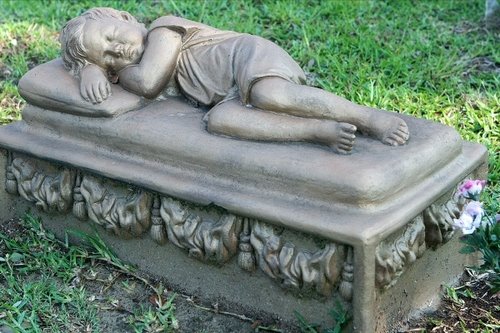
Graves of Infants


Infants' gravemounds are steps of angels, where
Earth's brightest gems of innocence repose.
God is their parent, so they need no tear;
He takes them to his bosom from earth's woes,
A bud their lifetime and a flower their close.
Their spirits are the Iris of the skies,
Needing no prayers; a sunset's happy close.
Gone are the bright rays of their soft blue eyes;
Flowers weep in dew-drops o'er them, and the gale gently sighs.

Their lives were nothing but a sunny shower,
Melting on flowers as tears melt from the eye.
Their deaths were dew-drops on heaven's amaranthine bower
Was tolled on flowers as Summer gales went by.
They bowed and trembled, yet they heaved no sigh,
And the sun smiled to show the end was well.
Infants have nought to weep for ere they die;
All prayers are needless, beads they need not tell,
White flowers their mourners are, Nature their passing bell.
Posted by Picasa

From the pen of Ronnie Blythe


[Ronnie at the John Clare Society Festival - July 2006]

A scholar has sent me his take on a John Clare poem, "Graves of Infants". Simultaneously in the press, I read about the Pope's having to deal with limbo. Look up limbo. Oh, my goodness. "Those in limbo are excluded from supernatural beatitude, but according to St Thomas Aquinas enjoy full natural happiness. The existence of limbo is a matter of theological opinion on which the Church has never pronounced definitely either way."

But then we come to limbus infantium - unbaptised babies who, although born in original sin, are innocent of personal guilt. In fact, although many a child was too ill to make the font, it would have had the midwife's sign of the Cross on its forehead, and her speedy "In the name of the Father ..." the minute it emerged, infant mortality and her grubby hands being what they were.

"Limbo ... mumbo-jumbo ...", murmured a voice on the radio. I suppose that the Church does have to turn out its medieval attic now and then. Here comes John Clare, however, father of nine, survivor of twins, and sanest of poets where children, and what we now dub ecology, are concerned. Rural religion and economics have frequently shown their madness when we compare them with what he preached.

In "Graves of Infants", he enters the vast sadness of 19th-century child mortality. You raised some, you lost some, they said. Victorian literature is full of what most families experienced, the death-beds of boys and girls. Country churchyards are full of children - city ones, too, of course. Should a child die now, it shakes the entire parish. Whether by disease or accident, it is unnatural to us. But not long ago it was entirely natural; for nature itself was tragic, as Clare knew all too terribly.

In June 1844, from Northampton Asylum - his "Mad House" - came his reconciling conclusion to the common fate of many children. It was the only answer that he could make sense of. Brief life or long life, they were no more than aspects of nature.

God is their parent, they need no tear...
A bud their life-time, and a flower to close...
All prayers are needless - beads they need not tell;
White flowers their mourners are, nature their passing bell.

[Church Times - Friday, 20th October, 2006 (excerpt)] Posted by Picasa

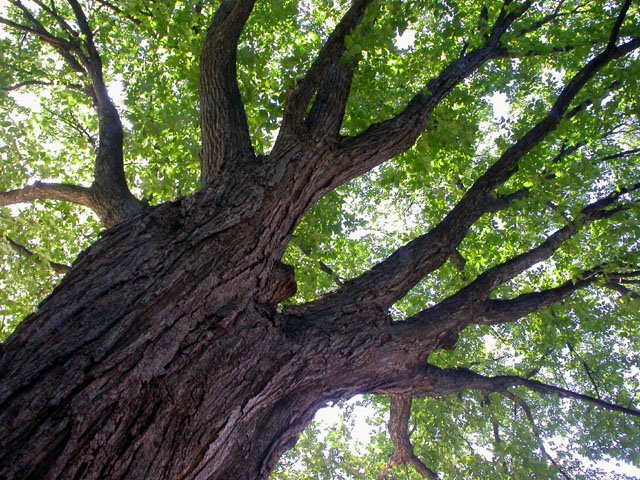
The Shepherd's Tree


Huge elm, with rifted trunk all notched and scarred,
Like to a warrior's destiny! I love
To stretch me often on thy shadowed sward,
And hear the laugh of summer leaves above;
Or on thy buttressed roots to sit, and lean
In careless attitude, and there reflect
On times, and deeds, and darings that have been--
Old castaways, now swallowed in neglect;
While thou art towering in thy strength of heart,
Stirring the soul to vain imaginings,
In which life's sordid being hath no part.
The wind of that eternal ditty sings,
Humming of future things, that burn the mind
To leave some fragment of itself behind.
 Posted by Picasa

Remembrances (IV)


By Langley Bush I roam, but the bush hath left its hill,
On Cowper Green I stray, tis a desert strange and chill,
And the spreading Lea Close oak, ere decay had penned its will,
To the axe of the spoiler and self-interest fell a prey,
And Crossberry Way and old Round Oak's narrow lane
With its hollow trees like pulpits I shall never see again,
Enclosure like a Buonaparte let not a thing remain,
It levelled every bush and tree and levelled every hill
And hung the moles for traitors--though the brook is running still
It runs a sicker brook, cold and chill.

O had I known as then joy had left the paths of men,
I had watched her night and day, be sure, and never slept agen,
And when she turned to go, O I'd caught her mantle then,
And wooed her like a lover by my lonely side to stay;
Ay, knelt and worshipped on, as love in beauty's bower,
And clung upon her smiles as a bee upon a flower,
And gave her heart my posies, all cropt in a sunny hour,
As keepsakes and pledges all to never fade away;
But love never heeded to treasure up the may,
So it went the common road to decay.
 Posted by Picasa

Remembrances (III)


Here was commons for their hills, where they seek for freedom still,
Though every common's gone and though traps are set to kill
The little homeless miners--O it turns my bosom chill
When I think of old Sneap Green, Puddock's Nook and Hilly Snow,
Where bramble bushes grew and the daisy gemmed in dew
And the hills of silken grass like to cushions to the view,
Where we threw the pismire crumbs when we'd nothing else to do,
All levelled like a desert by the never weary plough,
All banished like the sun where that cloud is passing now
And settled here for ever on its brow.

O I never thought that joys would run away from boys,
Or that boys would change their minds and forsake such summer joys;
But alack I never dreamed that the world had other toys
To petrify first feelings like the fable into stone,
Till I found the pleasure past and a winter come at last,
Then the fields were sudden bare and the sky got overcast
And boyhood's pleasing haunt like a blossom in the blast
Was shrivelled to a withered weed and trampled down and done,
Till vanished was the morning spring and set the summer sun
And winter fought her battle strife and won.
 Posted by Picasa

Remembrances (II)


[Crossberry Way in 2004]

When jumping time away on old Crossberry Way,
And eating awes like sugarplums ere they had lost the may,
And skipping like a leveret before the peep of day
On the roly poly up and downs of pleasant Swordy Well,
When in Round Oak's narrow lane as the south got black again
We sought the hollow ash that was shelter from the rain,
With our pockets full of peas we had stolen from the grain;
How delicious was the dinner time on such a showery day!
O words are poor receipts for what time hath stole away,
The ancient pulpit trees and the play.

When for school oer Little Field with its brook and wooden brig,
Where I swaggered like a man though I was not half so big,
While I held my little plough though twas but a willow twig,
And drove my team along made of nothing but a name,
"Gee hep" and "hoit" and "woi"--O I never call to mind
These pleasant names of places but I leave a sigh behind,
While I see little mouldiwarps hang sweeing to the wind
On the only aged willow that in all the field remains,
And nature hides her face while they're sweeing in their chains
And in a silent murmuring complains.
 Posted by Picasa

Remembrances (I)


Summer's pleasures they are gone like to visions every one,
And the cloudy days of autumn and of winter cometh on.
I tried to call them back, but unbidden they are gone
Far away from heart and eye and forever far away.
Dear heart, and can it be that such raptures meet decay?
I thought them all eternal when by Langley Bush I lay,
I thought them joys eternal when I used to shout and play
On its bank at "clink and bandy," "chock" and "taw" and "ducking stone,"
Where silence sitteth now on the wild heath as her own
Like a ruin of the past all alone.

When I used to lie and sing by old Eastwell's boiling spring,
When I used to tie the willow boughs together for a swing,
And fish with crooked pins and thread and never catch a thing,
With heart just like a feather, now as heavy as a stone;
When beneath old Lea Close oak I the bottom branches broke
To make our harvest cart like so many working folk,
And then to cut a straw at the brook to have a soak.
O I never dreamed of parting or that trouble had a sting,
Or that pleasures like a flock of birds would ever take to wing,
Leaving nothing but a little naked spring.
 Posted by Picasa