A gift for someone you love at Christmas?


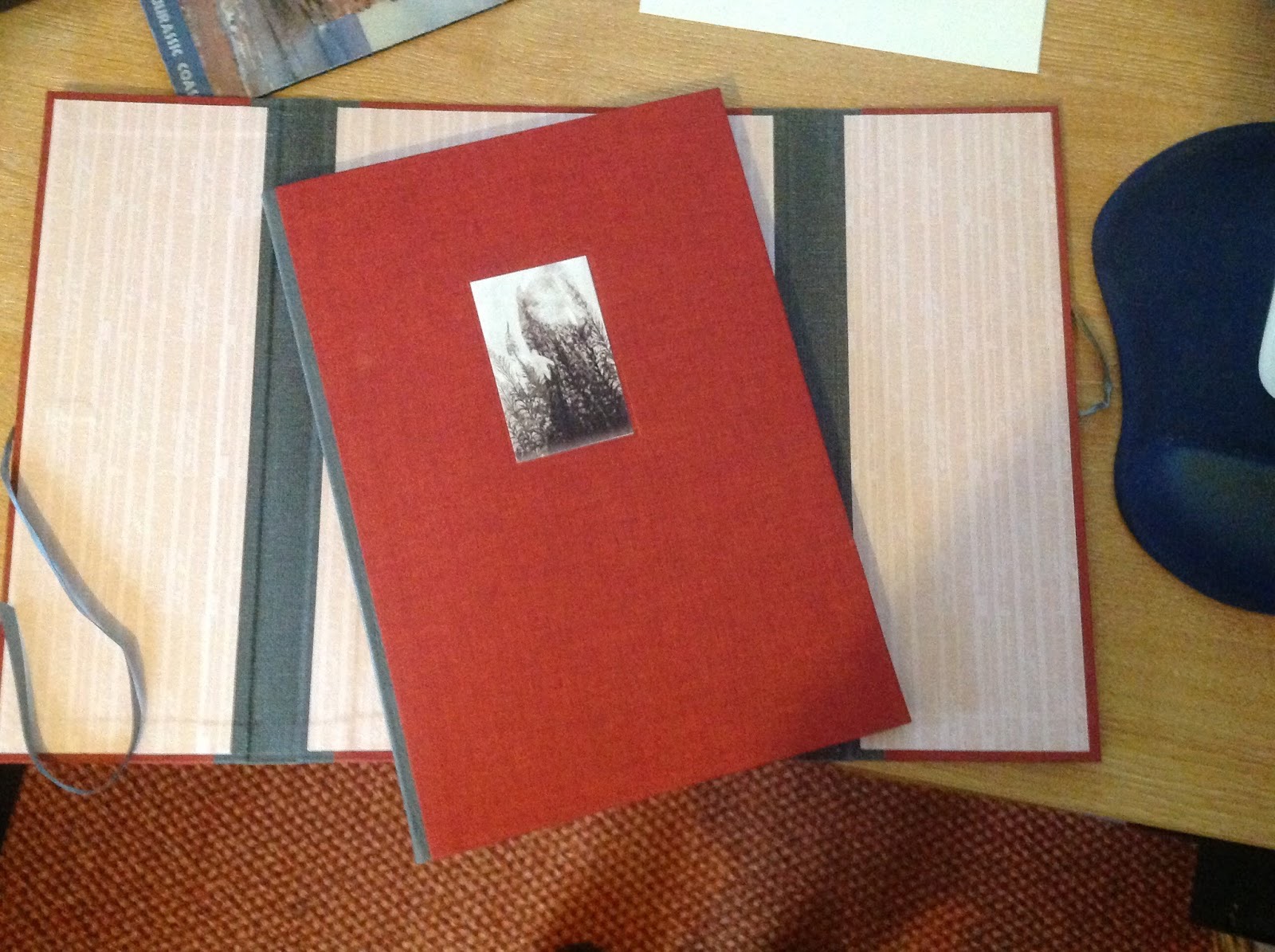
The time has come to make some space in my book stores.  I still have a box half-full of Arbour Editions first three books – our handmade, signed, limited edition trilogy.


Their particular focus is that of overt sensuality in Clare's poetry, revealed through both his knowledge and understanding of other poets, such as the Roman poet Ovid, and through his own undoubted experience of love and sexuality with the women in his life.  These books are:

The Lovers Meeting (2013) 
The Poet in Love (2014) & 
In the Shadows (2015).

In all aspects of production a handmade book is conceived and planned as a work of art, as well as a conveyor of Clare’s wonderful poems.  The content, the images, the text, the papers, the cover materials, the style of binding are all intended primarily to enhance and add to the experience of discovering more about a great poet’s wo


Book One - The Lovers Meeting - (from 1818) is a reworking by Clare of Ovid's first century erotic poem.   It seems to us very much with Patty in mind. 


   Book Two     - The Poet in Love - is the very real story of Clare's meeting, courtship of Patty Turner, and then her subsequent pregnancy and their marriage in 1820.


   Book Three   - In the Shadows - is the story of Clare's largely illusory relationship with Mary Joyce ranging over his whole life.


To clear, these are now priced at £12.50 each, or £30 for all three (P&P included).  Nowhere will you find more collectable Clare books as such a crazy price.  When published they were priced at £40 each.


Email me at arborfield (at) pm (dot) me


Rog Rowe.

from 'Child Harold'


Written in the autumn of 1841
Clare still haunted by thoughts of Mary Joyce.

Sweet solitude thou partner of my life
Thou balm of hope & every pressing care
Thou soothing silence o’er the noise of strife
These meadow flats & trees—the Autumn air
Mellows my heart to harmony—I bear
Life’s burthen happily—these fenny dells
Seem Eden in this sabbath rest from care
My heart with loves first early memory swells
To hear the music of those village bells

For in that hamlet lives my rising sun
Whose beams hath cheered me all my lorn life long
My heart to nature there was early won
For she was natures self—& still my song
Is her through sun & shade through right & wrong
On her my memory forever dwells
The flower of Eden—evergreen of song
Truth in my heart the same love story tells
—I love the music of those village bells

Hopes sun shines sweet...


Here is one of Lady Clementina Hawarden's delicious daughters (whoops, sorry... but they are all so beautiful) - the photo taken in around 1860 - coupled with a Clare sonnet published in our third handmade limited edition volume "In the Shadows".


Hopes sun shines sweet but who of hopes are proud

To see how soon it meeteth with a cloud

How many hopes & memorys went with thee

That forwerd looked to better destiny

Song seems not worth the muses care

Unless to grace it womans love be there

& fame is but a shadow crowned with {     }

Without the cheering sun of womans grace

When thy young bosom at the tales it heard

Heavd up & panted like a timid bird

Thy splendid beauty blushed upon the sight

Like sudden frenzy of unlooked for flight

Thou haven of my trouble when I see

That lovely face the show is past with me


A discovery from the Clare Archive in Peterborough 

by Professor Eric Robinson and Roger Rowe


Any thoughts on the missing word?

Pleasures Past


Springs sweets they are not fled tho summers blossom

Has met its blight of sadness drooping low
Still flowers gone bye find beds in memrys bosom
Lifes nursling buds among the weeds of woe
Each pleasing token of springs early morning
Warms wi the pleasures which we once did know
Each little stem the leafy wood bank 'dorning
Reminds of joys from infancy that flow
Springs early herralds on the winter smileing
That often on their errands meet their doom
Primrose & daisey dreary hours beguiling
Smile oer my pleasures past when ere they come
& the speckt throstle never wakes his song
But lifes past spring seems melting from his tongue

Love & Memory


Thou art gone the dark journey

That leaves no returning
Tis fruitless to mourn thee
But who can help mourning
To think of the life
That did laugh on thy brow
In the beautiful past
Left so desolate now


When youth seemed immortal
So sweet did it weave
Heavens haloo around thee
Earths hopes to decieve
Thou fairest & dearest
Where many were fair
To my heart thou art nearest


Though this name is but there
The nearer the fountain
More pure the stream flows
& sweeter to fancy
The bud of the rose
& now thourt in heaven
More pure is the birth
Of thoughts that wake of thee
Than ought upon earth


As a bud green in spring
As a rose blown in June
Thy beauty looked out
& departed as soon
Heaven saw thee too fair
For earths tennants of clay
& ere age did thee wrong
Thou wert summoned away


I know thou art happy
Why in grief need I be
Yet I am & the more so
To feel its for thee
For thy presence possest
As thy abscence destroyed

The most that I loved
& the all I enjoyed


So I try to seek pleasure
But vainly I try
Now joys cup is drained
& hopes fountain is dry
I mix with the living
Yet what do I see
Only more cause for sorrow
In loosing of thee


The year has its winter
As well as its May
So the sweetest must leave us
& the fairest decay
Suns leave us to night
& their light none may borrow
So joy retreats from us
Overtaken by sorrow


The sun greets the spring
& the blossom the bee
The grass the blea hill
& the leaf the bare tree
But suns nor yet seasons
As sweet as they be
Shall ever more greet me
With tidings of thee


The voice of the cuckoo
Is merry at noon
& the song of the nightingale
Gladdens the moon
But the gayest to day
May be saddest to morrow
& the loudest in joy
Sink the deepest in sorrow


For the lovely in death
& the fairest must die
Fall once & for ever
Like stars from the sky
So in vain do I mourn thee

I know its in vain
Who would wish thee from joy
To earths troubles again


Yet thy love shed upon me
Life more then mine own
& now thou art from me
My being is gone
Words know not my grief
Thus without thee to dwell
Yet in one I felt all
When life bade thee farewell


(Clare wrote in 1828 “Written a good while ago.” – ‘Letters, p436)

Ragwort


Due to the hot weather in July, the humble ragwort seems rather early this year.  Here in Devon it appears in profusion, even in places where it has been persecuted for years.


Ragwort, thou humble flower with tattered leaves
I love to see thee come & litter gold,
What time the summer binds her russet sheaves;
Decking rude spots in beauties manifold,
That without thee were dreary to behold,
Sunburnt and bare-- the meadow bank, the baulk
That leads a wagon-way through mellow fields,
Rich with the tints that harvest's plenty yields,
Browns of all hues; and everywhere I walk
Thy waste of shining blossoms richly shields
The sun tanned sward in splendid hues that burn
So bright & glaring that the very light
Of the rich sunshine doth to paleness turn
& seems but very shadows in thy sight.

John Clare Society Festival


Helpston : 15th-16th July, 2022


Our Annual Pilgrimage for the Festival is now just days away, when quite a lot of us will be meeting to honour the great man, on the anniversary of his birth, this year his 229th birthday!  All sorts of good things are planned.  As usual we will be travelling up from East Devon and will be staying in Northborough for two nights.  


On Friday 15th -- the first day of the Festival - many will wander up Woodgate together to St. Botolph’s church for the Midsummer Cushions ceremony with the children of the John Clare Primary School.  If you have never been, this is a mini-treat in itself, with the children laying their ‘cushions’ around Clare’s grave, and then we follow the children into the church to hear poems, specially written by the children, judged by members of the Society.  


Later in the day my wife Mary and I will be at the Blue Bell for dinner with a few friends and then we will be attending the Folk Evening.  Always fun.  I might even sing one of Clare’s songs again!


The Festival proper gets underway on the Saturday morning, the 16th with the usual mix of events including the AGM of the Society, an address by the President, Carry Akroyd, bookstalls, and much, much more.  Most of the day, Mary and I will be manning our bookstall in Botolphs Barn (next to the old Exeter pub that was), all my books will be at a discount especially for the Festival.


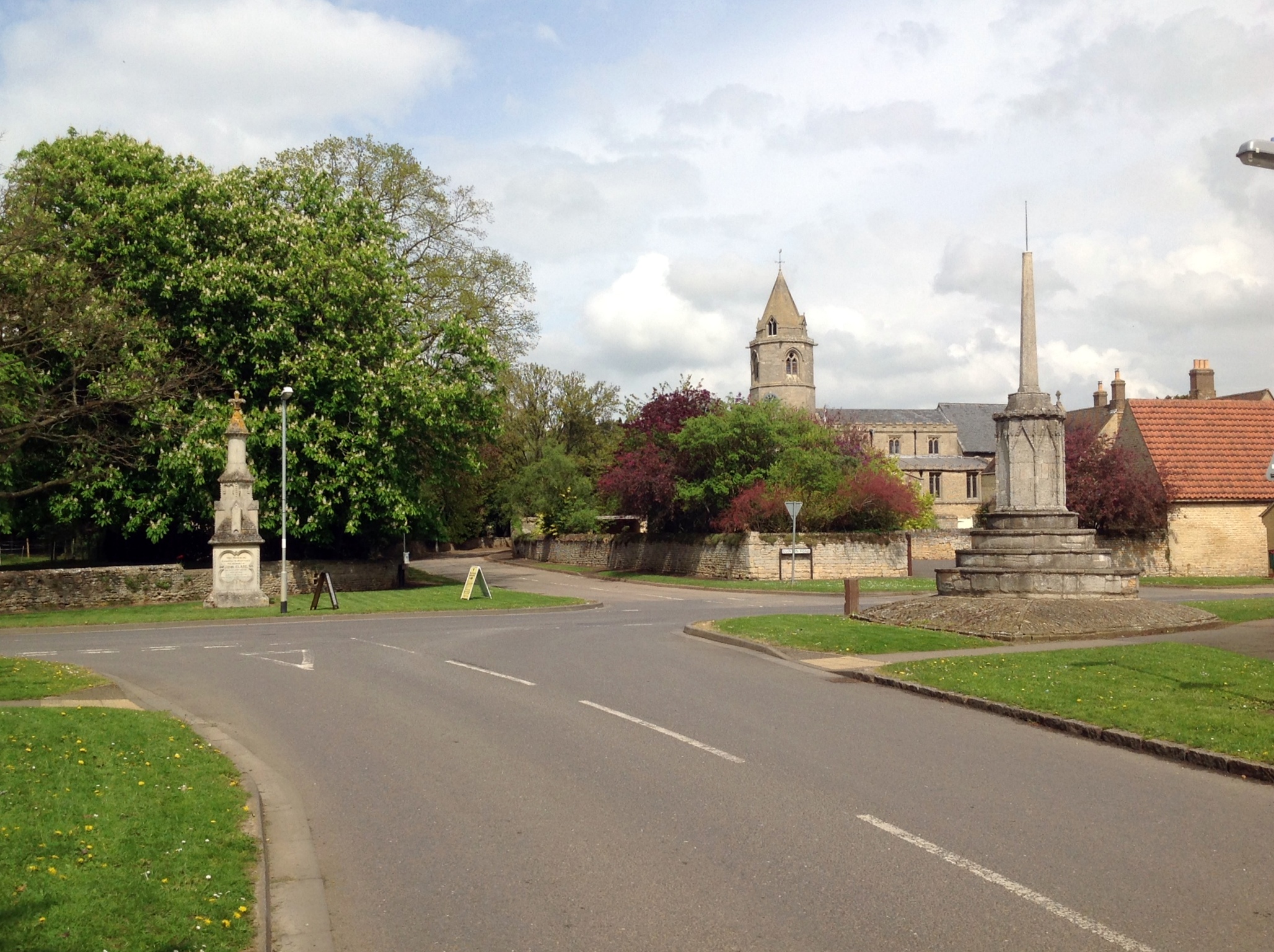
At around 3pm during the afternoon (meet at the Butter Cross) I will be leading a walk around Helpston, seeking out the old pubs that Clare knew and probably we will read a poem here and there.


We will again be at the Blue Bell in the evening for dinner, and a glass or two I’m sure.


It is always a treat to meet with folk that we have met at previous Festivals, but a special joy to meet new friends, especially those that hitherto we have only known via my ‘John Clare Poet’ facebook page.

(RR)


--- oOo ---

SONG: 'Now the Aprils Gentle Showers'


Now the aprils gentle showers
Notts the thorn for blosom

& the spring the sunny hours
Pricks daiseys on her bosom

Fear nothing love thy shoe to stain
As save the dewey morning
The pasture pads are dryd again
As soons the sun is dawning
Not till then I woud be fain
    To meet thee on the green


Then Ill get thee posies love
Then Ill get thee posies
Rob the woodbines from the grove
& hedgrow of its roses
Cull the cowslips from the lea
Wet wi the dewey morning
Bind it up & keept for thee
Gen the sun is dawning
Thens the time Id wish to see
    Thy beauties cheer the green


EP II 310

The Workhouse


Rural Evening (excerpt)

While at the parish cottage walld wi dirt
Were all the cumbergrounds of life resort
From the low door that bows two props between
Some feeble tottering dame surveys the scene
By them reminded of the long lost day
When she her self was young & went to play
& turning to the painfull scenes agen
The mournfull changes she has met since then
Her aching heart the contrast moves so keen
Een sighs a wish that life had never been


& vainly sinning while she strives to pray
Half smotherd discontent pursues its way

In wispering providence how blest shed been
If lifes last troubles shed escapd unseen
If ere want sneakd for grudgd support from pride
Shed only shard of childhoods joys & dyd
& as to talk some passing neighbours stand
& shoves their box within her tottering hand
She turns from echos of her younger years
& nips the portion of her snuff wi tears

(lines 137-156)


Chapbook No.23 was published on the 2nd April 2022, 

price £5 inclusive of P&P.

Drop me a line : arborfield (at) pm (dot) me

There’s a little odd house by the side of the Lane


Theres a little odd house by the side of the Lane

Where the daisy smiles sweet in the spring

Where the morning sun glitters like gold on the pane

& the hedge Sparrow trembles his wing

Where chaffinch green linnet & Sparrows have tones

That make the green Lane & the cottage their own

The sparrows they chirp & make nests i' the eaves

The chaffinch sings ‘pink’ in the hedge o' white thorn

That fences the garden & there the bird weaves

A nest of grey lichen soon as light i' the morn

& there bonny Susan will sit at the door

& see the green linnet at work at its nest

Where the robin flyes in for a crumb on the floor

& seems as if longing to sit on her breast

Opening of the Pasture


Within a closes nook beneath a shed

Nigh to the stack where stock in winter fed

Where black thorn thickets crowded close behind

& shielded cows & maidens from the wind

Two maidens sat free from the pasture sloughs

& told each other as they milked their cows

Their evening thoughts of love—while over head

The little Wren from its new dwelling fled

Who neath the hovels thatch with spring-hopes blest

Began to hang & build its curious nest

Of hair & feathers & root mosses green

It watched about & pickt its feathers clean

& cocked its tail & sung its evening strain

Then fluttering ventured to its nest again

While bluecaps blest the swelling buds to see

Repeated their two notes from tree to tree

The ass untethered rambling at his ease

 Knapt the black budding twigs of ashen trees

& sheep the green grass champt with greedy bite

A certain sign of sudden showers at night


(Lines 1-20)

Poems by John Clare


Oh!  Look what I’ve come across.  The much fabled ‘Poems of John Clare’ a collection by Arthur Symons published in 1908.  With no doubt the first, and crucial, glimmerings of the revival in the reading and celebration of the great poet’s work that continues to this day.  Yet I think it’s true to say that even 114 years later we still haven’t seen all there is to be discovered, for 158  years after Clare’s death, there are still reams yet to be properly examined and published.  And, no… the book is sadly not mine.


The Old Year


The Old Year's gone away
To nothingness and night
We cannot find him all the day
Nor hear him in the night
He left no footstep mark or place
In either shade or sun
Tho' last year he'd a neighbours face
In this he's known by none
All nothing every where
Mists we on mornings see
They have more substance when they're here
And more of form than he
He was a friend by every fire
In every cot and hall
A guest to every hearts desire
And now he's nought at all
Old papers thrown away
Or garments cast aside
E'en the talk of yesterday
Are things identified
But time once torn away
No voices can recall
The eve of new years day
Left the old one lost to all

Jany 1st/45

Christmas (7)


Now tis Winter plainly shown by the icicles which hang pendant from the low mossy eaves of the woodmans cottage -- who now with his mattocks and leather doublet is ready to begin his winters labour to cut down the wood in the still forrest and plash [shape] the hedge to stand as a fence against intruding cattle -- He and he only knows & sees the beauties & horrors of winter mingled together tho the short day – 


 For the shepherd cuts his journeys short & now only visits his flock on nescessity – Croodling with his hands in his pockets and his crook under his arms he tramples the frosty plain with dithering haste glad and eager to return to the warm corner of his cottage fire -- His favorite tree (where he was wont in summer to stretch his limbs in idle dalliance on the flowrey turf beneath its cooling shade) is now left desolate robbed both of its idle shepherd & the green foliage that clothd its summer boughs – 


 The Milk-boy too in his morning rambles no longer saunters to the pasture as he had used to do in summer (pausing on every pathway flower & swanking idly along; often staring with open mouth thoughtlessly musing on the heavens as if he could wish for somthing in the passing clouds leaning his lazy sides gainst everystile he come{s} to and can never get his heavy cloutred shoon over the lowest without resting      sighing as he retires with the deepest regret to leave such easy chairs) – 


But now in hasty claumping tried finding nothing but cold & snow to pause on he never stops to cawm his thoughtless head about – but shuffling along he make{s} the frosty plain reecho with his hasty bruzzing foot-steps – the stiles which where (were) so hard to climb over in summer are now scald (scaled) with the greatest ease and he wishes for nothing but his journey's end – prefering the sheltering warm confines of the farm yard and stables before the frozen plain – 


 But tis not so with the woodman no He glories in the weather & rising early in the dark morning ere the copper colored streaks appear to spread over the eastern skie – he pursues his journey over many new made hills and valleys of new fallen snow with “heart felt glee” cheering his rugged way with the oft repeated scrap of an harmless old song making the rihmy feathered thickets rezound in rural melody      Thus he cheerfully sallutes the winter morning till at length [he] enters the wild forrest – Here he brushes along his well known winding pad and the many intricating turns that leads to its deepest recesses – and then the beauties of witherd nature “surround him on every side”


Beauties of a winter Forrest (excerpt)

Hidden Treasures (Arbour Editions) 2016/9

Christmas (6)


The holly bush a sober lump of green
Shines through the leafless shrubs all brown & grey
& smiles at winter be it eer so keen
With all the leafy luxury of May
& O it is delicious when the day
In winters loaded garment keenly blows
& turns her back on sudden falling snows
To go where gravel pathways creep between
Arches of evergreen that scarce let through
A single feather of the driving storm
& in the bitterest day that ever blew
The walk will find some places still and warm
Where dead leaves rustle sweet & give alarm
To little birds that flirt & start away

(Winter Walk - MP V 225)

Christmas (5)


Image: Carry Akroyd


From: The Winter Canto: Northborough

Tis winter & the fields are bare & waste
The air one mass of ‘vapour clouds & storms’
The suns broad beams are buried & overcast
& chilly glooms the midday light deforms
Yet comfort now the social bosom warms
Friendship of nature which I hourly prove
Even in this winter scene of frost & storms
Bare fields the frozen lake & leafless grove
Are natures grand religion & true love

('Child Harold - lines 901 to 909)

Christmas (4)

The final part of 'Christmas' from The Shepherd's Calendar.  Typical of Clare that there is a barbed sting in the last 4 verses: the flight of those of privilege to poetry as their only real 'authentic' celebration of Christmas?  Finding for me an echo in 2021 in the popular celebration of 'the holidays' in warm and secure 'tradition', but without the content.


The wooden horse with arching head,
Drawn upon wheels around the room,
The gilded coach of gingerbread,
And many-colour'd sugar-plum,
Gilt-cover'd books for pictures sought,
Or stories childhood loves to tell,
With many an urgent promise bought,
To get to-morrow's lesson well.

And many a thing, a minute's sport,
Left broken on the sanded floor,
When we would leave our play, and court
Our parents' promises for more.
Tho' manhood bids such raptures die,
And throws such toys aside as vain,
Yet memory loves to turn her eye,
And count past pleasures o'er again.

Around the glowing hearth at night,
The harmless laugh and winter tale
Go round, while parting friends delight
To toast each other o'er their ale;
The cotter oft with quiet zeal
Will musing o'er his Bible lean;
While in the dark the lovers steal
To kiss and toy behind the screen.

Old customs! Oh! I love the sound,
However simple they may be:
Whate'er with time hath sanction found,
Is welcome and is dear to me.
Pride grows above simplicity,
And spurns them from her haughty mind,
And soon the poet's song will be
The only refuge they can find.

The Shepherd's Calendar

December (lines 97 - 128)

Coleridge or Clare?

Fairly amused to find this in an email from a friend (I live in Ottery St. Mary the birthplace of Coleridge):

"Entry on Samuel Taylor Coleridge fot the 3 volume 'Thoemmes Dictionary of British Classicists' (Bloomsbury / Thoemmes 2004). The entry focuses on Coleridge's classical scholarship as influenced by his wider metaphysical views of the importance of language and philological research as the keys to understanding western culture. Particular attention is given to the ways in which Coleridge's philosophy of language mediated his theological views and his understanding of both myth and race."


Clare? He was dragged up but wrote the most sublime poetry. One of the main reasons I love his work is precisely because you don't need a Classical, elitist education to understand it. Clare tears your heart apart, producing bright shattered pieces of glass which dazzle the mind lost in poetic darkness and fills it with a kaleidoscope of rainbow colours. Oh! and he wrote the most prescient prophetical poetic words, and he shares my understanding of race too.

Swamps of wild rush beds...


There are few places in England today that are remotely like the 'pre-enclosure' heaths that just 200 years ago would have been common. I am fortunate to live within a mile or so of one such surviving heath ~ Woodbury Commons ~ and yesterday spent a happy morning wandering through its "wild rush beds and sloughs squashy traces". Clare's poem describes almost exactly what I walked through. A stunning landscape, never cultivated, that Clare would instantly recognise as akin to his own 'Helpston' Commons.

~~ Double Click on my photo for the full effect ~~

Swamps of wild rush beds & sloughs squashy traces
Grounds of rough fallows wi thistle & weed
Flats & low vallies of king cups & daiseys
Sweetest of subjects are ye for my reed

Ye commons left free in the rude rags of nature
Ye brown heaths be cloathed in furze as ye be
My wild eye in rapture adores e'ery feature
Yere as dear as this heart in my bosom to me

O native endearments I woud not forsake ye
I woud not forsake ye for sweetest of scenes
For sweetest of gardens that nature coud make me
I woud not forsake ye dear vallies & greens

Tho nature neer dropt thee a cloud resting mountain
Nor water falls tumble their music to thee
Had nature denyd thee a bush tree or fountain
Thou still woud bin lovd as an eden by me

& long my dear vallies long long may ye flourish
Tho rush beds & thistles make most of your pride
May showers never fail the greens daiseys to nourish
Nor suns dry the fountain that rills by its side

Yer skies may be gloomy & misty yer mornings
Yer flat swampy vallies unholsome may be
Still refuse of nature wi out her adorning[s]
Yere as dear as this heart in my bosom to me

... from October


Like to a painted map the landscape lies
And wild above shine the cloud thronged skies
The flying clouds urged on in swiftest pace
Like living things as if they runned a race
The winds that oer each coming tempest broods
Waking like spirits in their startling moods
Fluttering the sear leaves on the blackning lea
That litters under every fading tree
And pausing oft as falls the patting rain
Then gathering strength and twirling them again
Till drops the sudden calm—the hurried mill
Is stopt at once and every noise is still
The startld stockdove hurried wizzing bye
As the still hawk hangs oer him in the sky
Crows from the oak trees quawking as they spring
Dashing the acorns down wi beating wing


The Shepherd's Calendar, with Village Stories, and Other Poems (1827)

Blackberrying


I was out on the bike this morning, and I saw what I always consider the first fruits of autumn... blackberries.  My mind immediately went to Clare 200 years ago.


Blackberrying may appear to be a trivial subject in John Clare's poetry, generally referred to in passing as a characteristic autumnal activity, along with collecting elderberries to make wine, or hazel nuts, or mushrooms, or water-cress, or gathering rotten wood for the cottage-fire.  Essentially, it is not different from those other rural activities, which formed part of the cottager's economy in every part of Europe.


In the English fens, the inhabitants believed that the produce of the wasteland came to them by right.  Also in the fens: "At dusk, the passer-by might be confronted by silently-moving lines of shadowy figures, their backs bent under the weight of trunks and piled-up wood, as they headed for home". Clare referred to this wood as "rotten," omitting the word "wood" occasionally.


Where stickers stroll from day to day

And gather loads of rotten wood

And poachers left in safety stray

When midnight wears its deepest mood.

(from Walks in the Woods)


Clare's natural sympathies are with the "stickers," as he calls them: the "wood-men," on the other hand, the agents of the landowners, are "terrifying rascals" who "make a prison of the forrests and are its joalers." (sic) Just as the fallen wood belonged by right to the local inhabitants in the forests in all parts of Europe, so, according to popular belief, did the fallen wood belong to the locals near the oak woods of Stamford, and, in both regions, led to conflict between landowners and peasants, between the lord's steward and gypsies, or the woodman and villagers.


The conflict over wood extended to other products of the waste -- rabbits, hares, birds, withies, reeds, cresses, sloes, dewberries, nuts, mushrooms, elderberries, wild strawberries and blackberries, not to mention eggs, snakes, deer, eels, fish, and other edibles.  The custom of nutting, which Clare celebrates, was particularly disliked by the landowners, their servants and the tenant-farmers.  The pages of the Stamford Mercury and Drakard's Stamford News are filled with advertisements and articles regarding the practice; the Mercury, upholding the rights of the landowners, the News those of the rural population.


(Robinson & Rowe)


Clare's political comments (again)

Clare's comments aways seem fresh and topical whenever I read them... here are two, both of which are not too well known.

"I fear these tory radicals these out of place patriots (or parrots) who are so loud in their [complaints] against the present ministry       [They] only want to make paddles of the people to sail into their harbours of old sinecures    & then to be again themselves      they will be as silent of suffering people and all such alusions - as an old maid of her age or an old borough monger of common honesty"


"The wigs & torys may be better classified perhaps by the terms of outs & ins    for be they wigs or torys in those situations    the outs are always vociverators of “liberty” “cruelty of taxation” & “good of the people”    while the ins are inflexible tyrants & determined supporters of all that is oppressing & annoying to the people   & benefitting to themselves & their connections"


Likely written in the mid-1820s.

Not the 2021 Festival... BUT


Not the 2021 Festival

Some idea of what some of us be doing on the 9th and 10th July @ Helpston


There being no John Clare Society Festival this year, a few of us will still be meeting to honour the great man this year at Helpston.  Not ‘official’ of course, but I wanted to attract everyone’s attention!  Anyone who would like to join us will be very welcome indeed, for any of the days.


Friday 9th

Helpston 2021. Folk I guess will be travelling on the 9th or 10th so several of us thought it might be good to start to gather in the Bluebell, after 7pm on the 9th for a convivial chat over a drink. It has already been announced that there will be the usual ‘Folk Evening’ at the Bluebell that evening, always a treat.

Saturday 10th

We will be meeting at 10:00am – 10:15am at Butter Cross in the centre of Helpston.  From there we will walk across the road to St. Botolph’s Church and Clare’s grave.  New Rector Gary (a Clare fan of course) is conducting a ‘Clare BCP Service' at 11am.  Only 30 places available however.


After which can either have a bite at the BBell and then stroll around the village, OR...go by car to St. Andrew’s Church, Northborough (via Maxey) and Patty’s grave (and other members of the family) – and finally to St. Benedict’s Church, Glinton and Mary’s grave.  Be armed with something of Clare’s poems/prose to read by each graveside. We do not intend to lay wreaths just honour each individual in our own way.


I am informed that the Cottage will be open for drinks (according to their website).


That evening we will certainly will return to the Bluebell for dinner as many of us have in earlier years.


Well... something like that anyway.  I’ll being a few books for those wishing to catch up with the Chapbook series and would be happy to give a talk, or conduct the walk, if required!  Very open to suggestions.


Roger R.