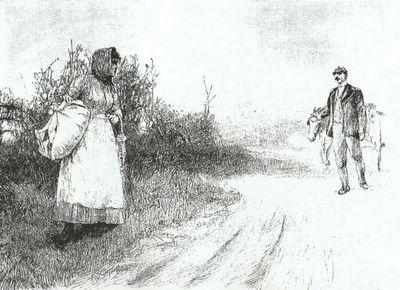
Love Cannot Die (III)


The sweetest voice that lips contain,
The sweetest thought that leaves the brain,
The sweetest feeling of the heart--
There's pleasure in its very smart.
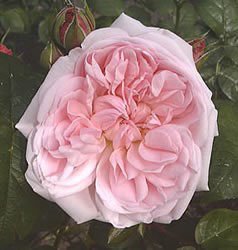
The scent of rose and cinnamon
Is not like love remembered on;
In falsehood's enmity they lie
Who sin and tell us love can die.
 Posted by Picasa

Remembrances (excerpt)


Summer's pleasures they are gone like to visions every one,
And the cloudy days of autumn and of winter cometh on.
I tried to call them back, but unbidden they are gone
Far away from heart and eye and forever far away.
Dear heart, and can it be that such raptures meet decay?
I thought them all eternal when by Langley Bush I lay,
I thought them joys eternal when I used to shout and play
On its bank at "clink and bandy," "chock" and "taw" and "ducking stone,"
Where silence sitteth now on the wild heath as her own
Like a ruin of the past all alone.

 Posted by Picasa

Wood Pictures in Summer


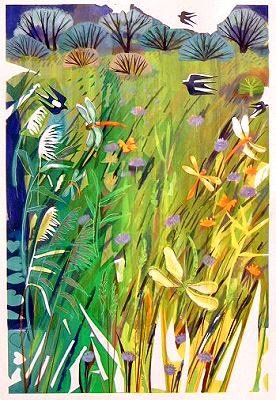
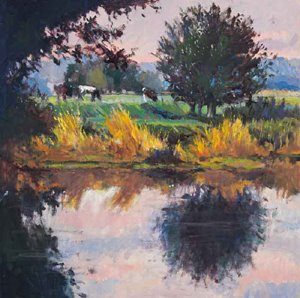
Delicious Green (Carry Akroyd)

Here is the whole of Carry's painting that illustrates the following lines. Incidentally, postcards of it (and a number of other paintings) are available from Carry by post. Try www.carryakroyd.co.uk

The one delicious green that now pervades
The woods and fields in endless lights and shades
And that deep softness of delicious hues
That overhead blends-softens-and subdues
The eye to extacy and fills the mind
With views and visions of enchanting kind
While on the velvet down beneath the swail
I sit on mossy stulp and broken rail
Or lean oer crippled gate by hugh old tree
Broken by boys disporting there at swee
While sunshine spread from an exaustless sky
Gives all things extacy as well as I
And all wood-swaily places even they
Are joys own tennants keeping holiday
 Posted by Picasa

Letter in Verse


Delicious Green (Carry Akroyd) detail*

Like boys that run behind the loaded wain
For the mere joy of riding back again,
When summer from the meadow carts the hay
And school hours leave them half a day to play;
So I with leisure on three sides a sheet
Of foolscap dance with poesy's measured feet,
Just to ride post upon the wings of time
And kill a care, to friendship turned in rhyme.
The muse's gallop hurries me in sport
With much to read and little to divert,
And I, amused, with less of wit than will,
Run till I tire.--And so to cheat her still.
Like children running races who shall be
First in to touch the orchard wall or tree,
The last half way behind, by distance vext,
Turns short, determined to be first the next;
So now the muse has run me hard and long--
I'll leave at once her races and her song;
And, turning round, laugh at the letter's close
And beat her out by ending it in prose.

* One of Carry's screenprints of this wonderful painting hangs a few feet away in my study. (I was fortunate to get number 1 of 8)  Posted by Picasa

Love Cannot Die (II)


Twas born upon an angel's breast.
The softest dreams, the sweetest rest,
The brightest sun, the bluest sky,
Are love's own home and canopy.
The thought that cheers this heart of mine
Is that of love; love so divine
They sin who say in slander's breath
That love belongs to sin and death.
 Posted by Picasa

Love Cannot Die (I)


In crime and enmity they lie
Who sin and tell us love can die,
Who say to us in slander's breath
That love belongs to sin and death.
From heaven it came on angel's wing
To bloom on earth, eternal spring;
In falsehood's enmity they lie
Who sin and tell us love can die.
 Posted by Picasa

Field Path


[Helpston Heath]

The beams in blossom with their spots of jet
Smelt sweet as gardens wheresoever met;
The level meadow grass was in the swath;
The hedge briar rose hung right across the path,
White over with its flowers--the grass that lay
Bleaching beneath the twittering heat to hay
Smelt so deliciously, the puzzled bee
Went wondering where the honey sweets could be;
And passer-bye along the level rows
Stoopt down and whipt a bit beneath his nose.
 Posted by Picasa

Bantry Bay


On the eighteenth of October we lay in Bantry Bay,
All ready to set sail, with a fresh and steady gale:
A fortnight and nine days we in the harbour lay,
And no breeze ever reached us or strained a single sail.
Three ships of war had we, and the great guns loaded all;
But our ships were dead and beaten that had never feared a foe.
The winds becalmed around us cared for no cannon ball;
They locked us in the harbour and would not let us go.

On the nineteenth of October, by eleven of the clock,
The sky turned black as midnight and a sudden storm came on--
Awful and sudden--and the cables felt the shock;
Our anchors they all broke away and every sheet was gone.
The guns fired off amid the strife, but little hope had we;
The billows broke above the ship and left us all below.
The crew with one consent cried "Bear further out to sea,"
But the waves obeyed no sailor's call, and we knew not where to go.

She foundered on a rock, while we clambered up the shrouds,
And staggered like a mountain drunk, wedged in the waves almost.
The red hot boiling billows foamed in the stooping clouds,
And in that fatal tempest the whole ship's crew were lost.
Have pity for poor mariners, ye landsmen, in a storm.
O think what they endure at sea while safe at home you stay.
All ye that sleep on beds at night in houses dry and warm,
O think upon the whole ship's crew, all lost at Bantry Bay.
 Posted by Picasa

The Sailor-Boy


Tis three years and a quarter since I left my own fireside
To go aboard a ship through love, and plough the ocean wide.
I crossed my native fields, where the scarlet poppies grew,
And the groundlark left his nest like a neighbour which I knew.

The pigeons from the dove cote cooed over the old lane,
The crow flocks from the oakwood went flopping oer the grain;
Like lots of dear old neighbours whom I shall see no more
They greeted me that morning I left the English shore.

The sun was just a-rising above the heath of furze,
And the shadows grow to giants; that bright ball never stirs:
There the shepherds lay with their dogs by their side,
And they started up and barked as my shadow they espied.

A maid of early morning twirled her mop upon the moor;
I wished her my farewell before she closed the door.
My friends I left behind me for other places new,
Crows and pigeons all were strangers as oer my head they flew.

Trees and bushes were all strangers, the hedges and the lanes,
The steeples and the houses and broad untrodden plains.
I passed the pretty milkmaid with her red and rosy face;
I knew not where I met her, I was strange to the place.

At last I saw the ocean, a pleasing sight to me:
I stood upon the shore of a mighty glorious sea.
The waves in easy motion went rolling on their way,
English colours were a-flying where the British squadron lay.

I left my honest parents, the church clock and the village;
I left the lads and lasses, the labour and the tillage;
To plough the briny ocean, which soon became my joy--
I sat and sang among the shrouds, a lonely sailor-boy.
 Posted by Picasa

The Poet's Death


[Another of Carry's wonderful works]

The world is taking little heed
And plods from day to day:
The vulgar flourish like a weed,
The learned pass away.

We miss him on the summer path
The lonely summer day,
Where mowers cut the pleasant swath
And maidens make the hay.

The vulgar take but little heed;
The garden wants his care;
There lies the book he used to read,
There stands the empty chair.

The boat laid up, the voyage oer,
And passed the stormy wave,
The world is going as before,
The poet in his grave.
 Posted by Picasa

Grasshoppers


(Carry Akroyd's 'Wet Meadow')

Grasshoppers go in many a thumming spring
And now to stalks of tasseled sow-grass cling,
That shakes and swees awhile, but still keeps straight;
While arching oxeye doubles with his weight.
Next on the cat-tail-grass with farther bound
He springs, that bends until they touch the ground.
 Posted by Picasa

The Yellowhammer

When shall I see the white thorn leaves agen
And yellowhammers gath'ring the dry bents
By the dyke side on stilly moor or fen
Feathered wi love and natures good intents
Rude is the nest this Architect invents
Rural the place wi cart ruts by dyke side
Dead grass, horse hair and downy headed bents
Tied to dead thistles she doth well provide
Close to a hill o' ants where cowslips bloom
And shed o'er meadows far their sweet perfume
In early Spring when winds blow chilly cold
The yellowhammer trailing grass will come
To fix a place and choose an early home
With yellow breast and head of solid gold.

(Still away from home at present... normal service will be resumed after next weekend. I think I speak for many when I say we did enjoy the 25th Anniversary Festival at Helpston last weekend... another wonderful, and thought provoking address from Ronnie Blythe and old and new friendships renewed).

RR

The Skylark

The rolls and harrows lie at rest beside
The battered road; and spreading far and wide
Above the russet clods, the corn is seen
Sprouting its spiry points of tender green,
Where squats the hare, to terrors wide awake,
Like some brown clod the harrows failed to break.
Opening their golden caskets to the sun,
The buttercups make schoolboys eager run,
To see who shall be first to pluck the prize -
Up from their hurry, see, the skylark flies,
And o'er her half-formed nest, with happy wings
Winnows the air, till in the cloud she sings,
Then hangs a dust-spot in the sunny skies,
And drops, and drops, till in her nest she lies,
Which they unheeded passed - not dreaming then
That birds which flew so high would drop agen
To nests upon the ground, which anything
May come at to destroy. Had they the wing
Like such a bird, themselves would be too proud,
And build on nothing but a passing cloud!
As free from danger as the heavens are free
From pain and toil, there would they build and be,
And sail about the world to scenes unheard
Of and unseen - Oh, were they but a bird!
So think they, while they listen to its song,
And smile and fancy and so pass along;
While its low nest, moist with the dews of morn,
Lies safely, with the leveret, in the corn.

The Peasant Poet


He loved the brook's soft sound,
The swallow swimming by;
He loved the daisy-covered ground,
The cloud-bedappled sky.
To him the dismal storm appeared
The very voice of God,
And when the evening rack was reared
Stood Moses with his rod;
And everything his eyes surveyed,
The insects i' the brake -
Were creatures God Almighty made;
He loved them for His sake.
A silent man in life's affairs,
A thinker from a Boy,
A peasant in his daily cares -
A Poet in his joy.
 Posted by Picasa

Rural Morning (last)


That stud the straggling briars as black as jet,
Which, when his cattle lair, he runs to get;
Or smaller kinds, as if beglossed with dew
Shining dim-powdered with a downy blue,
That on weak tendrils lowly creeping grow
Where, choaked in flags and sedges, wandering slow,
The brook purls simmering its declining tide
Down the crooked boundings of the pasture-side.
There they to hunt the luscious fruit delight,
And dabbling keep within their charges' sight;
Oft catching prickly struttles on their rout,
And miller-thumbs and gudgeons driving out,
Hid near the arched brig under many a stone
That from its wall rude passing clowns have thrown.
And while in peace cows eat, and chew their cuds,
Moozing cool sheltered neath the skirting woods,
To double uses they the hours convert,
Turning the toils of labour into sport;
Till morn's long streaking shadows lose their tails,
And cooling winds swoon into faultering gales;
And searching sunbeams warm and sultry creep,
Waking the teazing insects from their sleep;
And dreaded gadflies with their drowsy hum
On the burnt wings of mid-day zephyrs come,--
Urging each lown to leave his sports in fear,
To stop his starting cows that dread the fly;
Droning unwelcome tidings on his ear,
That the sweet peace of rural morn's gone by.
(end)

 Posted by Picasa

Rural Morning (VII)


Last on the road the cowboy careless swings,
Leading tamed cattle in their tending strings,
With shining tin to keep his dinner warm
Swung at his back, or tucked beneath his arm;
Whose sun-burnt skin, and cheeks chuffed out with fat,
Are dyed as rusty as his napless hat.
And others, driving loose their herds at will,
Are now heard whooping up the pasture-hill;
Peeled sticks they bear of hazel or of ash,
The rib-marked hides of restless cows to thrash.
In sloven garb appears each bawling boy,
As fit and suiting to his rude employ;
His shoes, worn down by many blundering treads,
Oft show the tenants needing safer sheds:
The pithy bunch of unripe nuts to seek,
And crabs sun-reddened with a tempting cheek,
From pasture hedges, daily puts to rack
His tattered clothes, that scarcely screen the back,--
Daubed all about as if besmeared with blood,
Stained with the berries of the brambly wood
 Posted by Picasa

Ronald on Clare [click for full article]


[Ronald Blythe]

Some film-makers have come to make a DVD about the poet John Clare. They move the furniture around, put the outraged cat on the doorstep, light the scene where I am to sit on a great old wooden chair on which I rarely sit, and we begin. "Say all that you want to: we can always cut."

I have spoken so much about this writer that I am worried about sounding glib. His poetry and prose steady my answers to the interviewer. His hawks and Northamptonshire birds of all kinds float in the air once more. The heatwave rain falls luxiously on the dense flowers beyond the window. The cross cat is let in.

Word from Wormingford
Church Times 23rd June 2006 Posted by Picasa

Rural Morning (VI)


Hodge, in his waggon, marks the wondrous tongue,
And talks with echo as he drives along;
Still cracks his whip, bawls every horse's name,
And echo still as ready bawls the same:
The puzzling mystery he would gladly cheat,
And fain would utter what it can't repeat,
Till speedless trials prove the doubted elf
As skilled in noise and sounds as Hodge himself;
And, quite convinced with the proofs it gives,
The boy drives on and fancies echo lives,
Like some wood-fiend that frights benighted men,
The troubling spirit of a robber's den.

And now the blossom of the village view,
With airy hat of straw, and apron blue,
And short-sleeved gown, that half to guess reveals
By fine-turned arms what beauty it conceals;
Whose cheeks health flushes with as sweet a red
As that which stripes the woodbine oer her head;
Deeply she blushes on her morn's employ,
To prove the fondness of some passing boy,
Who, with a smile that thrills her soul to view,
Holds the gate open till she passes through,
While turning nods beck thanks for kindness done,
And looks--if looks could speak-proclaim her won.
With well-scoured buckets on proceeds the maid,
And drives her cows to milk beneath the shade,
Where scarce a sunbeam to molest her steals--
Sweet as the thyme that blossoms where she kneels;
And there oft scares the cooing amorous dove
With her own favoured melodies of love.
Snugly retired in yet dew-laden bowers,
This sweetest specimen of rural flowers
Displays, red glowing in the morning wind,
The powers of health and nature when combined.
 Posted by Picasa

Rural Morning (V)


And lowing steers that hollow echoes wake
Around the yard, their nightly fast to break,
As from each barn the lumping flail rebounds
In mingling concert with the rural sounds;
While oer the distant fields more faintly creep
The murmuring bleatings of unfolding sheep,
And ploughman's callings that more hoarse proceed
Where industry still urges labour's speed,
The bellowing of cows with udders full
That wait the welcome halloo of "come mull,"
And rumbling waggons deafening again,
Rousing the dust along the narrow lane,
And cracking whips, and shepherd's hooting cries,
From woodland echoes urging sharp replies.
 Posted by Picasa

Rural Morning (IV)


And now, when toil and summer's in its prime,
In every vill, at morning's earliest time,
To early-risers many a Hodge is seen,
And many a Dob's heard clattering oer the green.

Now straying beams from day's unclosing eye
In copper-coloured patches flush the sky,
And from night's prison strugglingly encroach,
To bring the summons of warm day's approach,
Till, slowly mounting oer the ridge of clouds
That yet half shows his face, and half enshrouds,
The unfettered sun takes his unbounded reign
And wakes all life to noise and toil again:
And while his opening mellows oer the scenes
Of wood and field their many mingling greens,
Industry's bustling din once more devours
The soothing peace of morning's early hours:
The grunt of hogs freed from their nightly dens
And constant cacklings of new-laying hens,
And ducks and geese that clamorous joys repeat
The splashing comforts of the pond to meet,
And chirping sparrows dropping from the eaves
For offal kernels that the poultry leaves,
Oft signal-calls of danger chittering high
At skulking cats and dogs approaching nigh.

(tbc) Posted by Picasa