The Fortune Teller

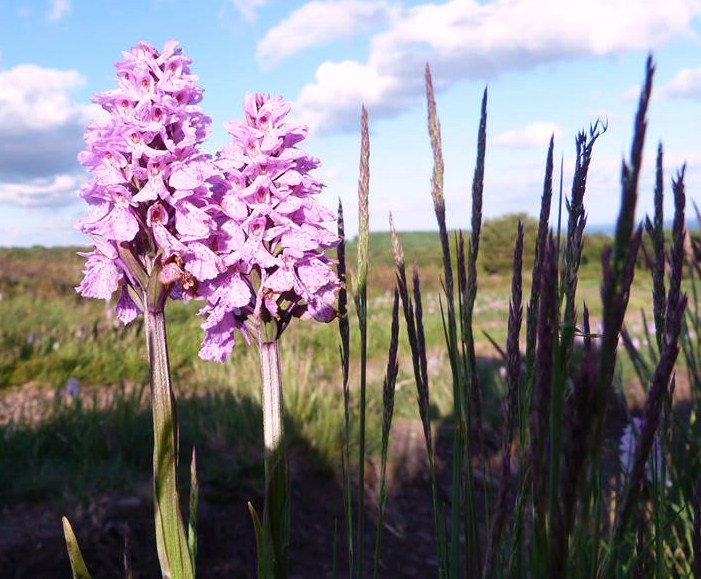
I had scarcely sat down to examine the beautiful flower before I discovered a smoke rising from the wood which I found to proceed from a camp of gispies & I had scarcely discovred the smoke before a fine dark gipsey girl stood before me with her fine black hair parted over her forhead wrapt in a red silk hankerchief & a red cloak negligently fastened with a hook & eye just below the swelling of a bosom that might win a wish from a prince to make a pillow of under the green wood tree & with as little ceremony as if she had known me a lifetime

Pet MS A46 p56-7

THE DAISY BUTTON TIPP'D WI' DEW

The daisy button tipped wi' dew Green like the grass was sleeping
On every thing 'neath heaven blue In moonlight dew was weeping
In dark wood sung the Nightingale The moon shone round above me
My arms were clasped round Mary Gale My dearest do you love me
Her head a woodbine wet wi' dew Held in the moonlight sleeping
And two in one together grew Wi' daisy buds a weeping
O' Mary Gale sweet Mary Gale How round and bright above thee
The moon looks down on grassy vale My dearest can you love me
How sweet the moonlight sleeps and still Firdale and hedge row brere
The mole wharps mound and distant hill Is moonlight every where
The totter grasses pendalums Are still as night above me
The bees are gone and nothing hums My dearest do you love me
The moonlight sleeps o'er wood and wall Sweet Mary While you'r nigh me
Can any charm O' courtship fail And any joy pass by me
The gossamer all wet wi' dew Hung on the brere above me
She leaned her cheek and said ‘I do’ And ever mean to love thee    


LP II 775

The Invitation


Come hither, my dear one, my choice one, and rare one,
And let us be walking the meadows so fair,
Where on pilewort and daisies the eye fondly gazes,
And the wind plays so sweet in thy bonny brown hair.

Come with thy maiden eye, lay silks and satins by;
Come in thy russet or grey cotton gown;
Come to the meads, dear, where flags, sedge, and reeds appear,
Rustling to soft winds and bowing low down.

Come with thy parted hair, bright eyes, and forehead bare;
Come to the whitethorn that grows in the lane;
To banks of primroses, where sweetness reposes,
Come, love, and let us be happy again.

Come where the violet flowers, come where the morning showers
Pearl on the primrose and speedwell so blue;
Come to that clearest brook that ever runs round the nook
Where you and I pledged our first love so true.


Tibbles II 480

Superstitions Dream (excerpt)

For All Hallows Eve, I though it might well be in order to post one of Clare's little known 'gothic' works.  After all he shared a publisher with Percy Shelley, whose wife Mary published 'Frankenstein' anonymously in London in 1818, and under her own name in 1823 (I've always wondered if her husband's death in June 1822 prompted her to add her name to the second and subsequent editions?)  Such writing seemed to be 'in the air' in this post-Napoleonic world.

So here is part of 'The Dream', originally written as 'Superstitions Dream' before 1822.  Mrs Emmerson wrote to Clare on 7th January 1822, "What a treasure have you this day placed before me in your 'Superstitions Dream' "... John Taylor, his publisher wrote "perhaps the ablest Poem you have written".  A real surprise to me that it is not better known...

I felt all terrors of the d-----d & fell
With conscious horror that my doom was hell
And memory mockd me like a haunting ghost
With light & life & pleasures that were lost
As dreams turn night to day & day to night
So memory flashd her shadows of that light
That bade the mornings suns in glory rise
To bless green fields & trees & purple skies
& wakend life its pleasures to behold
That light flashd on me like a story told
& days mispent with friends & fellow-men
& sins committed all was with me then.
The boundless hell were tortures never tire
Glimmerd beneath me like a world on fire
That soul of fire like to its souls entombd
That still consumes & never is consumd
Seemd nigh at hand -- where oft the sulphry damps
Oerawd that light as glimmers dying lamps
Spreading a horrid gloom from side to side
A twilight scene of terrors half descryd
Sad boild the billows of that burning sea
And fates sad yellings dismal seemd to be
Blue rolld its waves with horrors uncontroled
& its live wrecks of souls dashd howling as they rolld
Again I struggld & the spell was broke
& midst the laugh of mocking ghosts I woke
& my eyes opend on a hopless sight
The early morning & its welcome light
& as I ponderd oer the past profound
I heard the cock crow and I blest the sound

(lines 143-172)
MP I 325

The Luckless Journey

Tho' fine prov'd the morning O sad prov'd the ramble
     Adown by the Willows adown by the lee
Adown by the cottage where Hedge rows of bramble
     Hides it from all strangers but unlucky me

For there I espied and admir'd a young rosie
      lov'd and had hopes in possesing the flower
Till Cupid flew laughing away with the posie
     And left me the thorns which I feel at this hour

O Willows and brambles—what deamon beset me
     To make me to go where your cottage arose
Yet still was you all I could hope to forget ye
     But o there's no hopes in forgetting the rose


The wounds are not lightly that abscence should ease 'em
     No no they'r so deep twill but poison the pain
Tho lifes sober autumn may wisely appease 'em
     A pang sad Remembrance will ever retain

EP I 218

Dear brother robin... (excerpt)

Dear brother robin this comes from us all
With our kind love & could Gip write and all
Though but a dog hed have his love to spare
For still he knows and by your corner chair
The moment he comes in he lyes him down
and seems to fancy you are in the town


This leaves us well in health thank God for that
For old acquaintance Sue has kept your hat
Which mother brushes ere she lays it bye
and every sunday goes upstairs to cry
Jane still is yours till you come back agen
& neer so much as dances with the men


& Ned the woodman every week comes in
& asks about you kindly as our kin
& he with this and goody Thompson sends
Remembrances with those of all our friends
Father with us sends love untill he hears
& mother she has nothing but her tears


Yet wishes you like us in health the same
& longs to see a letter with your name
So loving brother dont forget to write
Old Gip lies on the hearth stone every night
Mother cant bear to turn him out of doors
& never noises now of dirty floors


Father will laugh but lets her have her way
& Gip for kindness get a double pay
So Robin write & let us quickly see
You dont forget old friends no more than we
Nor let my mother have so much to blame
To go three journeys ere your letter came


(lines 1-30)

MP V 168

Autumn Change

The leaves of Autumn drop by two's and three's
And the black cloud hung o'er the old low church
Is fixed as is a rock that never stirs
But look again and you may well perceive
The weather cock is in another sky
And the cloud passing leaves the blue behind

Crimson & yellow bloch'd with Iron Brown
The Autumn tans and varigates the leaves
The nuts are ripe in woods about the Town
Russet the cleared fields where the bindweed weaves
Round stubbles and still flowers the trefoil seeds
And troubles all the land from rig to furrow
Ther's nothing left but rubbish and foul weeds
I love to see the rabbits snug made burrow
Under the old edge bank or hugh mossed oak
Claspt fast with Ivy there the rabbit breeds
Where the Kite pelews and the Ravens croak
And hares and Rabbits at their leisure feed
So varying Autumn thro her changes runs
Season of sudden storms and brillient suns.

LP I 523

O gentle star so placidly

Today, is national poetry day on the theme of 'light', so here is Clare reminding us of the beautiful qualities of a pinprick of light shining in the darkness.

O gentle star so placidly
That brings the news of pearly even
The first of all the arching sky
To whom the glinting light is given
O gentle star I hope to view
Thy bright eye smile the lonly lee
Reflecting in a globe of dew
Thy silver light is dear to me
O gentle herald thee I hail
Thou tellst the glaring day is gone
O coudst thou bring a better tale
From one sweet cot thourt shining on

EP I 443

Cloud Shapes

Clouds rack and drive before the wind
In shapes and forms of every kind,
Like waves that rise without the roar,
And rocks that guard an untrodden shore;
Now castles pass majestic by
And ships in peaceful havens lie;
These gone, ten thousand shapes ensue,
For ever beautiful and new.

The scattered clouds lie calm and still,
And day throws gold on every hill;
Their thousand heads in glory run,
As each were worlds and owned a sun.
The rime it clings to everything,
It beards the early buds of spring;
The mossy pales, the orchard spray,
Are feathered with its silver-grey.


Pet MS A59 r78

Clouds...

In spots like these the shepherd loves to fling
His careless limbs neath the young leaves of spring
To muse upon some wild brooks hasty streams
& idly revel over waking dreams


Or stretched in carless mood upon his back
To view the blue sky & its sweeping rack
Lifting his fancies to each passing cloud
& shaping every one that journeys proud

Oer its mysterious way to forms & things
That fancys visions to his memory brings

Some like to rocks gleam in their wondering eye
Mid shoreless seas & some go swifter bye

Like mighty ships still charging on their way
To other ships more beautiful than they
Soft as the paper ships they often make
& float on curdling brook or meadow lake

Some white like palaces of marble seems
The towers of heaven which they’re called in dreams
& which his waking fancys grandly shine
The abodes of one that instant suns divine

Some like to mountains shadow high & some
Like the dear vales that nestle round their home
With cots & groves & fountains streaming bye
Spread lengthening seems to the musing eye

& thus they dream away their idle hours
Stretched on the trembling grass & nodding flowers
& wishing often on their summer beds
For the larks wings that whistles oer their heads

To realize their artless dreams & flye
To the soft bosom of the summer sky
To trace the seeming vales and mountains there
That hopeless distance personifys so fair

Each flower agen smiles thro the aching dew
Like lovly absent faces seen anew
Rich with the same purfumes & luscious smiles
They wake agen ones leisure to beguile

Like an old tale of pleasure told again
After long years of desolating pain

Pet MS A21 p6
(one of the alternative readings of 'Spring' from Midsummer Cushion - there are quite a few)

The sallows...

A treat for us all...

The sallows glisten in their gay palm bloom
Studded with golden down where earliest come
The solitary wild bees that servive
Their trance & ere the tenants of the hive
Dare venure out are searching field & wood
& from scarce blossoms seeking scanty food
Hanging there yet half doubtful hopes along
& humming wearily a lonly song

Pet MS A21 p4

"The frog croaks loud..."

[Image: Anne Lee]

A sonnet, but WHAT a sonnet...

The frog croaks loud & maidens dare not pass 
But fear the noisome toad & shuns the grass
& on the sunny banks they fear to go 
Where hissing snakes run to the floods below
The nuthatch noises loud in wood & wild
Like women turning skreekers to a child
The schoolboy hears & brushes through the trees 
& runs about till drabbled to the knees
The old hawk winnows round the old crows nest
The schoolboy hears & wonder fills his breast
He throws his basket down to climb the tree 
& wonders what the red blotched eggs can be
The green woodpecker bounces from the view 
& hollow as they buzz along kew kew 


MP V 379

The crow sat on the willow tree

[Image: 'Deepings crowsong' by John Lincoln]

The crow sat on the willow tree
A-lifting up his wings,
And glossy was his coat to see,
And loud the ploughman sings,
"I love my love because I know
The milkmaid she loves me";
And hoarsely croaked the glossy crow
Upon the willow tree.
"I love my love" the ploughman sung,
And all the fields with music rung.

"I love my love, a bonny lass,
She keeps her pails so bright,
And blythe she trips the dewy grass
At morning and at night.
A cotton dress her morning gown,
Her face was rosy health:
She traced the pastures up and down
And nature was her wealth."
He sung, and turned each furrow down,
His sweetheart's love in cotton gown.

John Clare, Bird Poems

introduced by Peter Levi (London: Folio Society, 1980)

Plowman Singing

Here morning in the ploughmans songs is met
Ere yet one footstep shows in all the sky
& twilight in the east a doubt as yet
Shows not her sleeve of grey to know her bye
Woke early I arose & thought that first
In winter time of all the world was I
The old owls might have halooed if they durst
But joy just then was up & whistled bye
A merry tune which I had known full long
But could not to my memory wake it back
Untill the ploughman changed it to the song
O happiness how simple is thy track
-- Tinged like the willow shoots the easts young brow
Glows red & finds thee singing at the plough


MP V 224

Harvest, Clare and Ronnie Blythe


Turning my John Clare lectures into a book, I don't have to wonder what happened in his day; for there it is, every exhausting moment of it, every custom, every ritual joy and pain. And I can just see a Helpston farmer apologising for the inconvenience. Those who brought the harvest home would have swayed across their own thresholds at a moonlit midnight, scratched to bits, a little drunk, as they deserved to be.

Upon the waggon now, with eager bound, 
The lusty picker whirls the rustling sheaves; 
Or, resting ponderous creaking fork aground, 
Boastful at once whole shocks of barley heaves: 
The loading boy revengeful inly grieves 
To find his unmatched strength and power decay; 
The barley horn his garments interweaves; 
Smarting and sweating 'neath the sultry day, 
With muttering curses stung, he mauls the heaps away.

Ronald Blythe - Word from Wormingford - 19th August 2005
(excerpt - lines 29 to 37 of 'The Harvest Morning')

Pastime in Summer

Norman Goodman writes... "It's now 7 pm and I've suddenly noticed that it's that bit darker early ! Nearly half-way through August ! I've been reading John Clare's "Pastime in Summer" - dating is always hard, but he was probably late 20's. It's a lovely rhapsodic , slow poem about summer pleasures and in one section his subject is an angling-outing with a companion. He has the gear and the scene is beautifully described. Almost idyllic.  John also takes a book : James Thompson's "The Seasons". 

"Pastime....." is a longish poem but repays reading . (A glass of wine is going down a treat !) After the fishing palls a bit, he turns to his book and soon Thompson's story of Damon and Musidora gets him 'rapt'. It's quite an erotic tale, even in Thompson (and plenty of artists were drawn to the subject - Musidora's skinny dip whilst Damon looks on in secret."

Published only in Early Poems (Volume II) and the Tibble collection from the 1930s.  Dated exactly to the 21st August 1820.  I've split the poem into groups of 10 lines to aid reading, the original manuscript does not have verses.

Give me the leisure of a summers day.  
With one old friend to loiter it away

Were level meadows stretch their green domains
Alive with joys of laughing maids & swains
Some making hay beside our pleasant paths
& mowers sweeping with their even swaths
Neath sheltering haycocks some & willow bowers
Soaking the bottle in their booning hours
Discoursing onward with our lines & hooks
With some refreshments nor without some books

Cheerd by the rural objects as we pass
To were trees shadows keepeth green the grass
Checking intrusions of the summer suns
There drop us down close were the river runs
In sight of rural sounds & pleasing strife
That warms the laughing landscape into life
& while in cheerfull mirth as we prepare
Our sporting things & bait our angles there
With flye or fish of artificial forms
To shun the anguish of the wreathing worms

Feel warm hopes glow with earnest eagerness
To mark the signs that promise us success
As gleaming suns that twitter while they gleam
& dance their blazing shadows in the stream
Were small black moths dip light their fluttering wings
& heedless fishes leap in bouncing springs
Curving the flood tho winds withold their breath
In ceasless eddies with their playfull mirth
Then free from bother of entangling weeds
As we throw in were clear the stream proceeds

Watch for the trembling float that shows a bite
& followd jerks that dodge it out of sight
While taper angles as we eager rise
Bend as we pull & prophesy the prize
Thus sporting on till weary with the cheat
The fish get wise & sicken & retreat
Our quiet floats more shoyley sliding bye
To jump at distance for the dancing flye
Leaving us then our leisure to regale

To sip refreshment from our hoarded ale
& loll upon the grass neath willows grey
To view the scene or talk the hours away
Or with my Thompson added joys engage
Reading the season in his blooming page
Were budding springs eternally appear
& fragrant summers freshen all the year
There while the willow oer the water spreads
& bushes throw dark shadows oer our heads
Well fancy Damons rapt in daring dreams
& Musidora's shrinking to the streams

With flowing hair let loose upon the breeze
Oer maddening charms a Damon only sees
White breasts & burning cheeks that redder glow
To see the image in the flood below
Tho our real scenes perfections fail to give
Were Musidoras of less beauty live
Yet there are Damons that as warmly burns
& maidens lov'd that make as kind returns
& then as weary of our reading hours
Wed shut our books & look upon the flowers

Or any scene that might engage the eye
As bumming by us went the dragon flye
In wonders admiration often led
To mark confusions nature round us spread
Inscects on constant travel as they past
Shows each new comer different to the last
& butterflyes whose varied painted wings
Boasts every hue that summers glory brings
Like the gilt eyes in peacocks feathers some
Some hued like flowers to which their wanderings come

In namless colours others sport the plains
Hued as misterious as their birth remains
Then cropping flowers that round our sitting dwells
Nor marvel less to meet so many smells
Each different scent possest by different tribes
Sense easy feels but ignorance describes
For like the mistery wonder left before
We know we feel it & we know no more

Thus woud we muse oer natures varied book
Were fresh enchantments rose at every look

That with new wonders on our senses come
& still delight us till we ramble home
When suns sink downward with a reddening face
& blue clouds fringe as if with golden lace
Sunk 'hind the meadows bridges calm & chill
& thro the arches peep'd upon us still
While blue cool haziness approachd us round
& misty patches smoakd about the ground
When reeds & flags that rustld by our seat
As if their bloom was witherd by the heat

Now greend agen from gifts which night recieves
As forming dewdrops moisten on the leaves
When laughing labour left its toils & glee
& sought its dwellings with the housing bee
Whose mournfull hums bewails declining day
While waking crickets welcome it away
& fluttering larks betook themselves to rest
& with less caution passd us to their nest
Then woud we leave what leisure had pursued
& in our memorys feel the joy renewd

EP II 671

Clare later took the story and re-worked it in several different ways.  In 'Upon the Plain' for instance, here is the denouement :

Stretchd on the Green—her beauty seen
To all advantage there
To meet the breeze that fand the trees
Her snowy breast was bare
She meets his view Sweet Peace adieu
And Pleasures known before
He sighs—Approves—Admires & loves
—His heart's his own no more

EP I 138

Helpstone (extract)

A reminder of the causes of Clare's sadness at the loss of the fields he knew as a boy.  And the passage "accursed wealth" to which many of his (largely wealthy remember) reading public -  and his publishers Taylor and Hessey - objected so much.   Quite likely one of the reasons why Clare's second collection did so badly?

As fair & sweet they bloomd thy plains among
As blooms those Edens by the poets sung
Now all laid waste by desolations hand
Whose cursed weapons levels half the land
Oh who could see my dear green willows fall
What feeling heart but dropt a tear for all
Accursed wealth oer bounding human laws
Of every evil thou remains the cause
Victims of want those wretches such as me
Too truly lay their wretchedness to thee
Thou art the bar that keeps from being fed
& thine our loss of labour & of bread
Thou art the cause that levels every tree
& woods bow down to clear a way for thee


Sweet rest & peace ye dear departed Charms
Which once Industry cherishd in her arms
When peace & plenty known but now to few
Where known to all & labour had his due
When mirth & toil companions thro' the day
Made labour light & passd the hours away
When nature made the fields so dear to me
Thin scattering many a bush & many a tree
Where the wood minstrels sweetly joind among
& cheer'd my needy toilings with a song

Poems Descriptive of Rural Life and Scenery (1820)
(lines 121-144)

The Old Willow


The juicey wheat now spindles into ear
& trailing pea blooms ope their velvet eyes
& weeds & flowers by crowds far off & near
In all their sunny liveries appear
For summers lustre boasts unnumbered dyes
How pleasant neath this willow by the brook
Thats kept its ancient place for many a year
To sit & oer these crowded fields to look
& the soft dropping of the shower to hear
Ourselves so sheltered een a pleasant book
Might lie uninjured from the fragrant rain
For not a drop gets through the bowering leaves
But dry as housed in my old hut again
I sit & troubleous care of half its claim deceive

Middle Period IV 267

This sonnet reminded me rather of Clare's "Round Oak Spring" written around the same time.  My photograph above looks rather a lot like what is left of Round Oak Spring to the south and west of Rice Wood.  It is now channelled into a drainage ditch.  I like to think that one of the many willows that graced the bank of the spring survived as a reminder of what was lost.

Sweet brook Ive met thee many a summers day
& ventured fearless in thy shallow flood
& rambled oft thy sweet unwearied way
Neath willows cool that on thy margin stood


Middle Period IV 280